You will find here a few tips and information about our hikes
Not all hikes are equally difficult. The distance, the gradient or the type of path will influence the level of difficulty and the level of effort. Here are a few tips on how we determine the difficulty level.
You will also find some additional information on equipment and the organisation of our hikes.
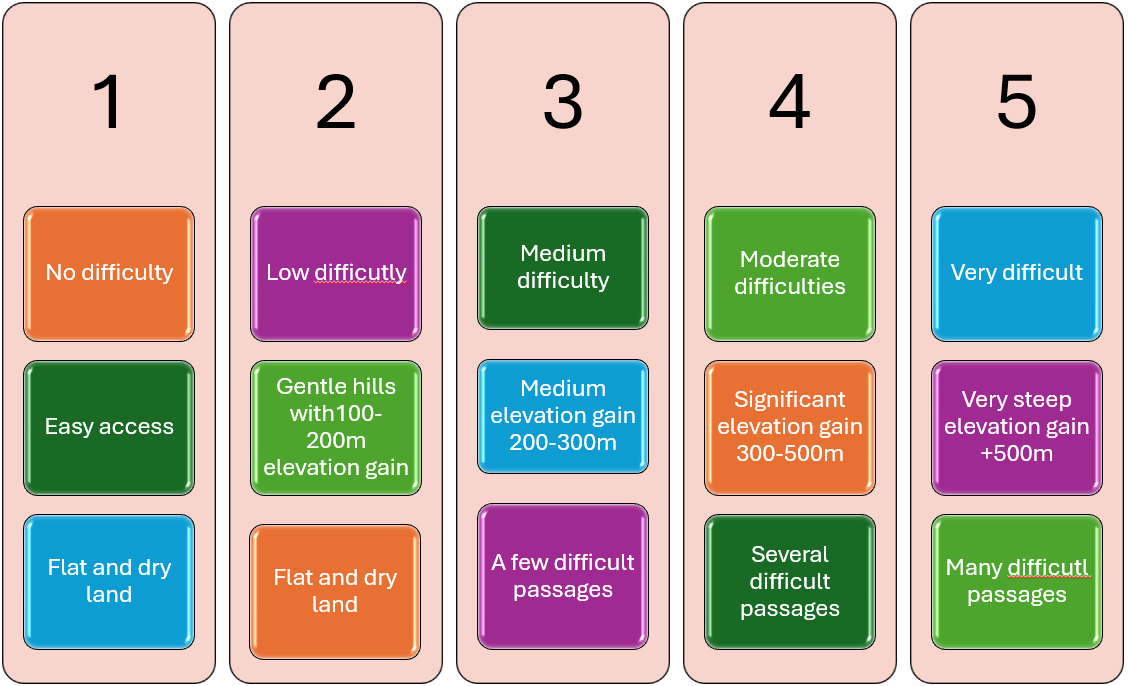
The technical difficulty
It refers to the topology of the land: what type of ground are we going to cross, are there any passages that are difficult to walk on?
Seasonal conditions should also be taken into consideration: a winter hike on snow is more difficult than one on a dry ground. The addition of equipment such as snowshoes or skis will increase the technical difficulty.
We also take into account the cumulative difference in altitude, which can increase the difficulty of the hike. This will also be taken into account in the fitness effort.
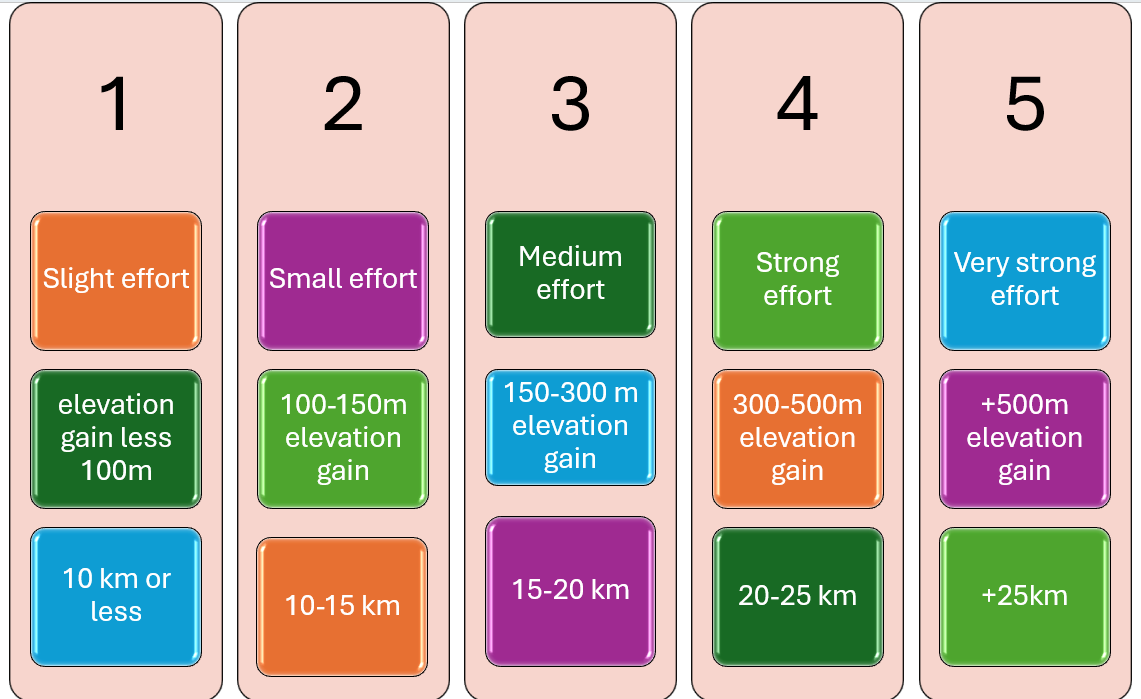
Fitness and effort
Physical effort, also known as fitness effort, varies from one hike to the next. Some hikes require more effort than others.
To classify the degrees of effort difficulties, we will take into account the duration of the hike, endurance and the cumulative difference in altitude. They all have an impact on the heart rate.
These classifications are given as a guide so that people can get an idea of the type of hike they are planning to attend
How hikes are organised
You will find the meeting point and time in each hike description.
All our walks start and finish at a place accessible by Swiss public transport. Generally, we do a loop and the start and finish points are the same. If this is not the case, I will indicate this in the hike description.
The hikes take place within a maximum radius of 2 hours from Geneva by public transport. All participants are responsible for their own transport and for arriving at the meeting point on time.
The equipment you should consider
For each hike, you should bring enough to drink for the whole hike and a picnic lunch.
Hiking shoes and walking poles are strongly recommended for each hike, but are not compulsory..
Clothing suitable for hiking is recommended. Don’t forget to wrap up warm in the winter months, and pack some rain gear in your rucksack.
If certain hikes require specific equipment (snowshoes, for example), this will be indicated in the description of the hike.
 LGBTIQ+ Randonnées